Who Owns What? Inside 6 Brand Conglomerates That Control Fashion, Beauty, and Everyday Goods
Six parent companies own hundreds of the world's best-known fashion, beauty, and household brands.
Luxury sells scarcity. Consumer packaged goods sell scale. Here's who owns the world's biggest brands, how their strategies are changing, and what it means if you're building a brand of your own.
At a Glance
- Six parent companies own hundreds of the world's best-known fashion, beauty, and household brands
- The biggest players are now growing by selling brands
- Single-brand dependence is the biggest risk in a portfolio. Kering learned this the hard way with Gucci
- For independent brands, every category a giant exits is an opening
A small number of brand conglomerates own the labels that dominate global consumer spending, from luxury boutiques to supermarket shelves. For decades, their growth strategy was simple: keep buying. Buy the heritage house, buy the indie upstart, buy the category leader.
That strategy is changing. Over the past 18 months, the world's largest brand owners have started growing by subtraction, selling or spinning off entire divisions to focus on what they do best. For brand owners, founders, and anyone curious about how consumer brands really work, these moves are a roadmap to where the industry is headed.
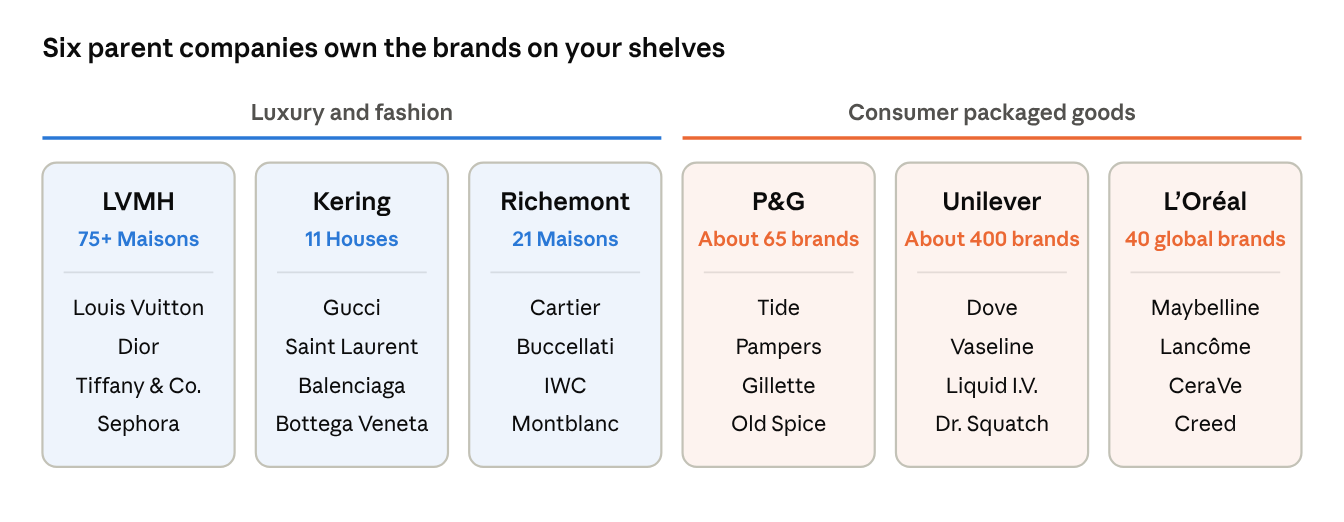
Counts use each company's own definition. Richemont's reflects the Baume & Mercier sale that closed July 2026. Unilever's is its commonly cited total from before the ice cream and food exits.
What Is a Brand Conglomerate?
A brand conglomerate is a parent company that owns and operates a portfolio of distinct consumer brands. Each brand typically keeps its own name, identity, and customer, while the parent company shares the expensive infrastructure behind them: manufacturing, supplier relationships, logistics, retail space, marketing budgets, and talent.
Conglomerates generally fall into two camps. Luxury and fashion conglomerates, such as LVMH, Kering, and Richemont, profit from exclusivity and high prices. CPG conglomerates, such as Procter & Gamble, Unilever, and L'Oréal, profit from volume, distribution, and products people buy every week.
Who Owns What: The Parent Companies Behind Major Brands
Many of the brands consumers think of as independent belong to the same handful of parent companies. Here's a quick reference.
Brands on the move
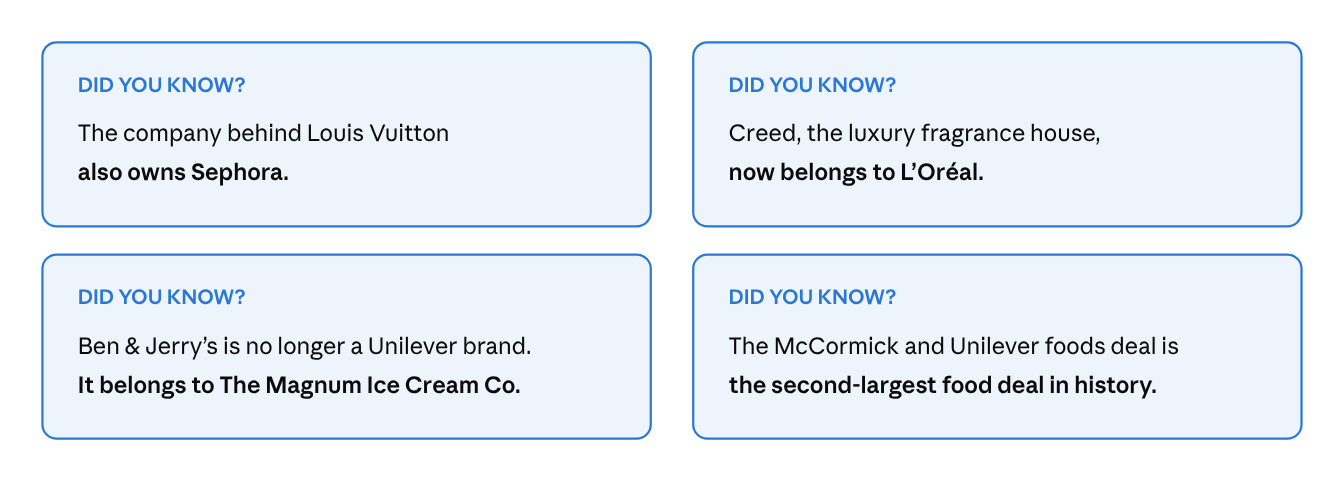
The biggest ownership changes of the past year.
Did you know?
The Luxury Conglomerates: How LVMH, Kering, and Richemont Make Money
Luxury conglomerates run on a counterintuitive formula. Each house presents itself as independent, artisanal, and rare. Behind the scenes, they share everything expensive. Scarcity out front, scale in the back.
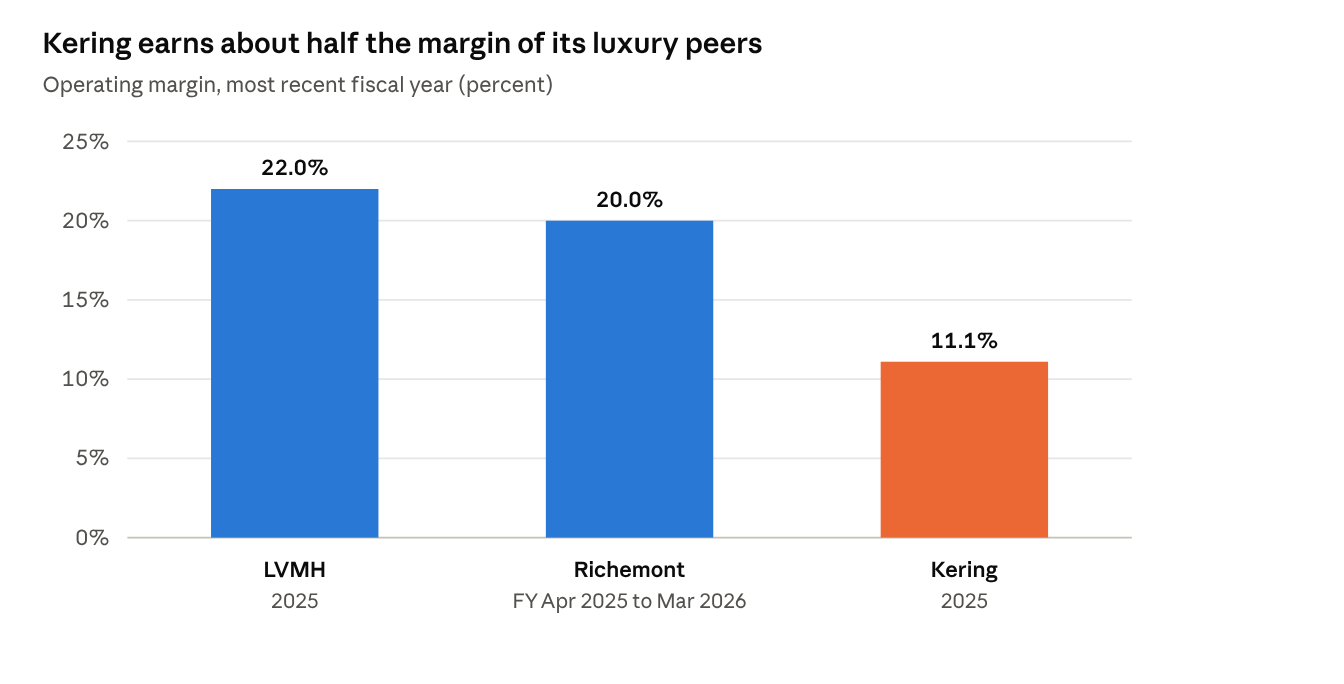
Company-reported results · LVMH and Kering calendar 2025, Richemont fiscal year April 2025 to March 2026
Sources: LVMH 2025 results · Richemont FY26 results · Kering 2025 results
LVMH: Why Diversification Protects the World's Largest Luxury Group
No luxury group has built a deeper bench, and 2025 showed why that matters. Even as LVMH's revenue fell 5% to €80.8 billion, its core business held up: fashion and leather goods kept a 35% operating margin despite falling sales. When handbag demand slowed, beauty retail stepped in, with selective retailing posting a 28% jump in operating profit, led by Sephora. That's the value of a portfolio: no single house has to carry the group.
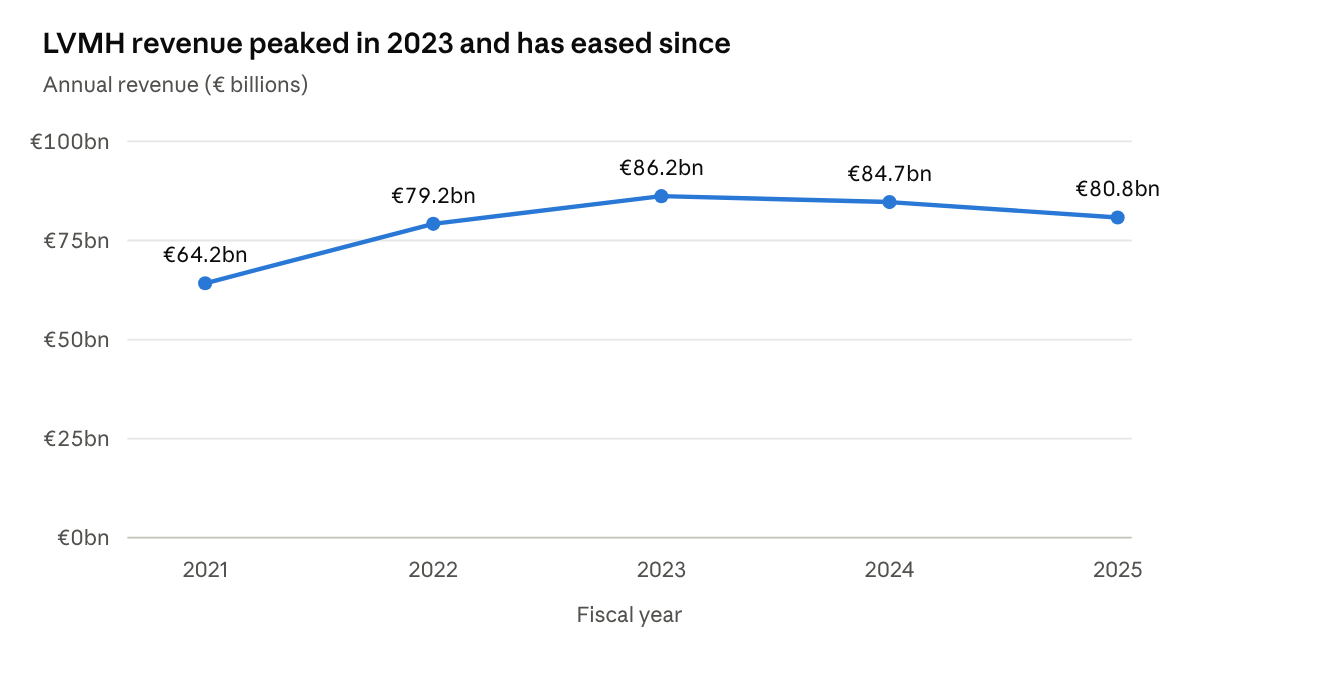
LVMH annual results · 2021 to 2025
Sources: LVMH 2025 results · Division results · Five-year revenue
Kering: The Risk of Relying on One Brand
Kering shows what happens when diversification doesn't actually diversify. Gucci made up 44.5% of its revenue and 63% of its operating income in 2024, so when Gucci struggled, the whole group did. In 2025, Gucci's sales fell 22%, and Kering's recurring operating margin dropped to 11.1% from 14.5% the year before. New CEO Luca de Meo moved quickly, agreeing to sell the beauty business to L'Oréal for €4 billion to cut debt and refocus on fashion.
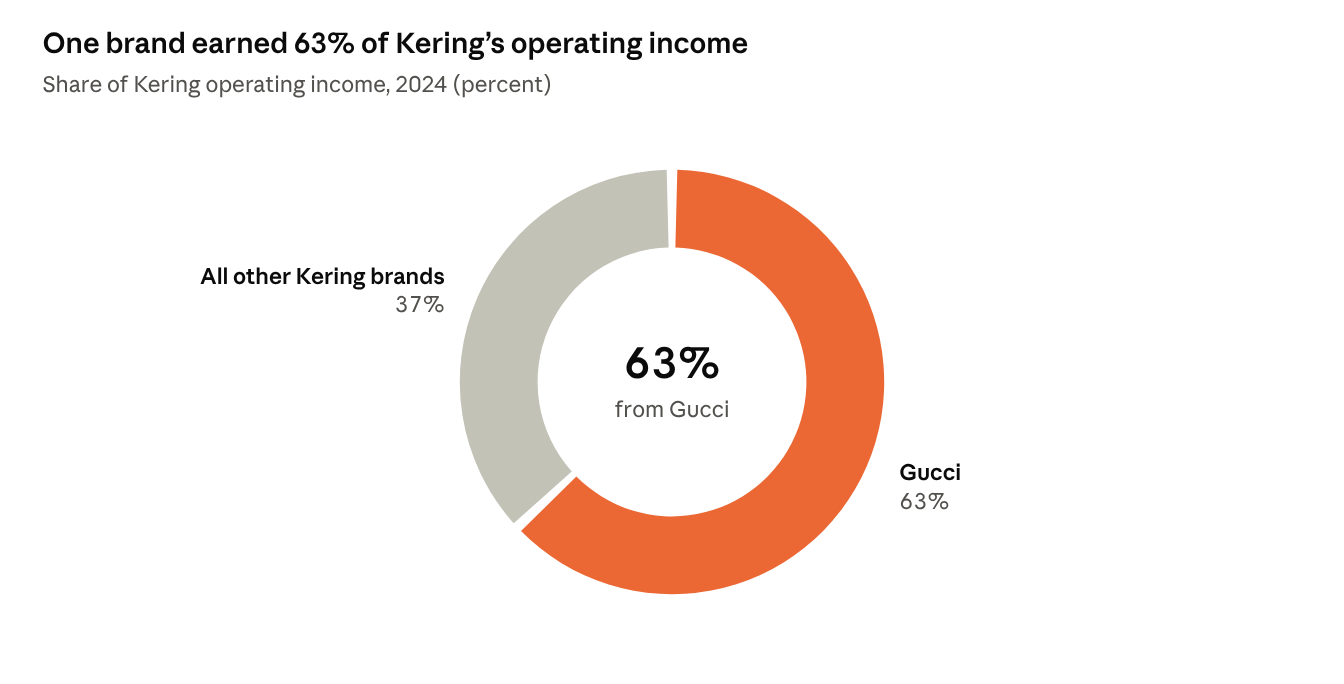
Kering 2024 results as reported by Reuters · operating income by brand
Sources: Kering 2025 results · Gucci share and beauty sale (Reuters)
Richemont: Why Jewelry Outperforms the Rest of Luxury
While fashion slowed, jewelry kept climbing. For the fiscal year ended March 2026, Richemont's group sales reached €22.4 billion, up 11% at constant exchange rates, with its Jewellery Maisons delivering a 30.5% operating margin. Watches tell a different story, with the Specialist Watchmakers posting a 3.4% operating margin. In hard luxury, the products that hold their value hold their customers.
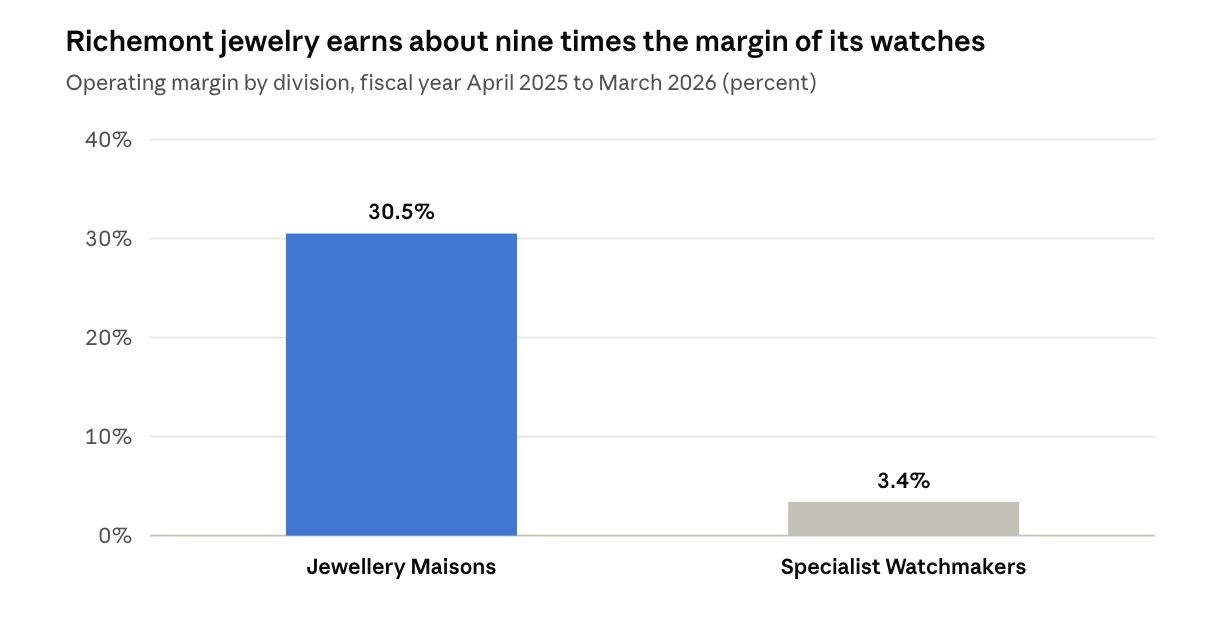
Sources: Richemont FY26 results
The CPG Conglomerates: How P&G, Unilever, and L'Oréal Compete on Scale
CPG giants don't win on desire. They win on ubiquity: getting the right product onto every shelf, in every market, at the right price. Their advantage is distribution, and their discipline is focus.
Procter & Gamble: Focus as a Competitive Strategy
P&G has spent a decade concentrating on the categories it leads, and it's pushing further. In 2025, the company announced plans to cut 7,000 jobs over two years and exit some product categories and brands in certain markets, including potential divestitures. Its manufacturing footprint is an underrated advantage: P&G has said about 90% of what it sells is produced domestically, a meaningful hedge as tariffs reshape global sourcing.
About 90% of what P&G sells is produced domestically, according to the company.
Sources: P&G restructuring and domestic production (Reuters) · P&G portfolio focus
Unilever: The Biggest Portfolio Shake-Up in Consumer Goods
No company on this list is changing faster. Unilever completed the demerger of its ice cream business, now The Magnum Ice Cream Company, in December 2025. Four months later, it agreed to combine its Foods business with McCormick in a $44.8 billion deal expected to close by mid-2027, creating a roughly $20 billion global flavor company that brings together Hellmann's, Knorr, McCormick, Frank's, and Cholula. What remains is built around beauty, wellness, and personal care, with CEO Fernando Fernandez prioritizing premium segments, digital commerce, and growth in the United States and India.
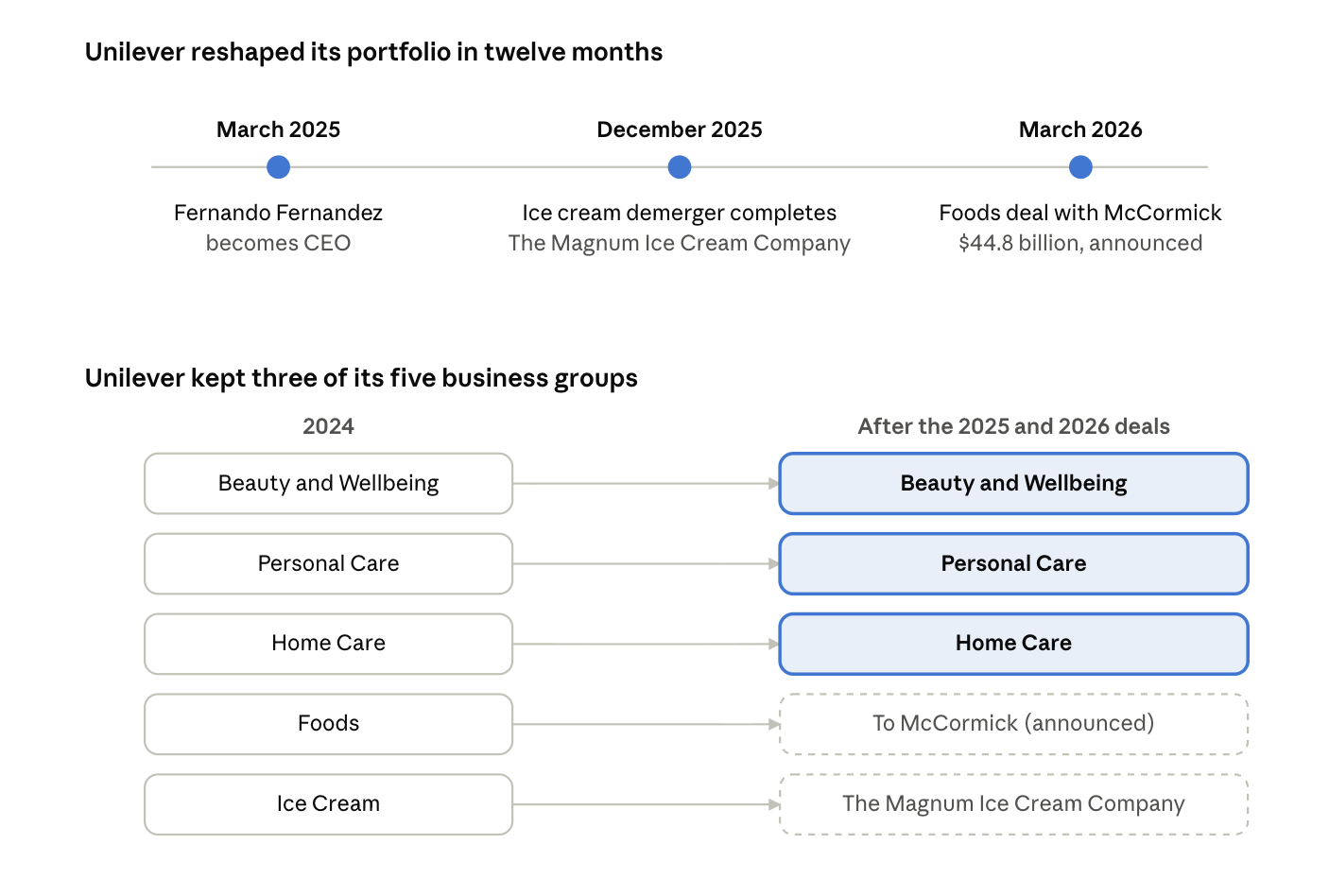
Sources: Ice cream demerger · McCormick deal · Fernandez as CEO (Reuters) · 2026 priorities
L'Oréal: The Beauty Industry's Most Active Buyer
L'Oréal's tiered structure lets it capture beauty spending at every price point, from drugstore Maybelline to luxury Lancôme to dermatologist-recommended CeraVe. And when others sell, L'Oréal buys. Its acquisition of Kering Beauté, completed in March 2026, came with fifty-year exclusive licences for Bottega Veneta and Balenciaga beauty and fragrance, with Gucci's licence to follow once the existing Coty agreement expires. The fashion house keeps the name. The beauty specialist runs the business.
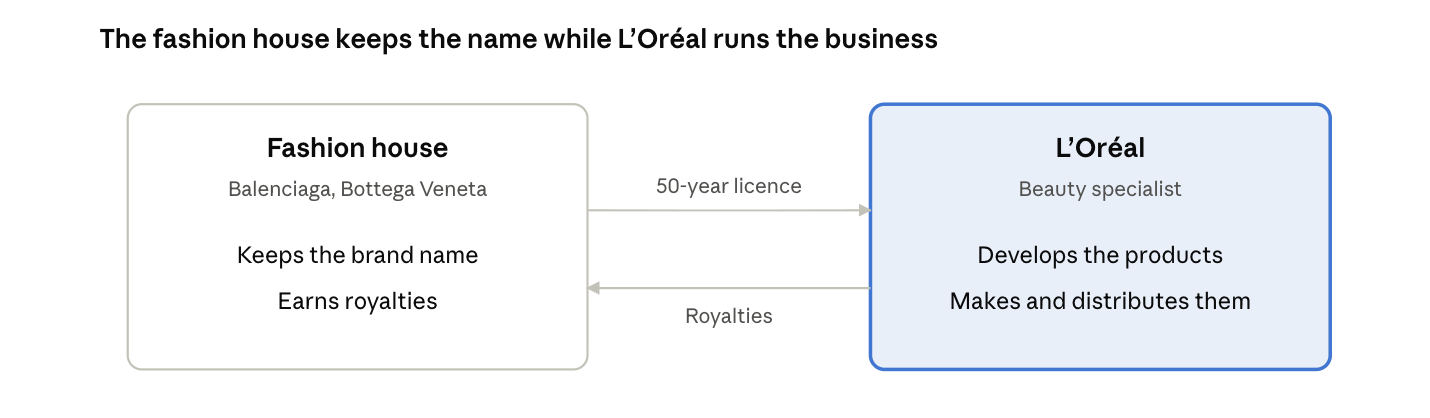
Sources: L'Oréal completes Kering Beauté acquisition · L'Oréal brand portfolio
The Brand Conglomerate Playbook: 4 Strategies Every Brand Owner Should Know
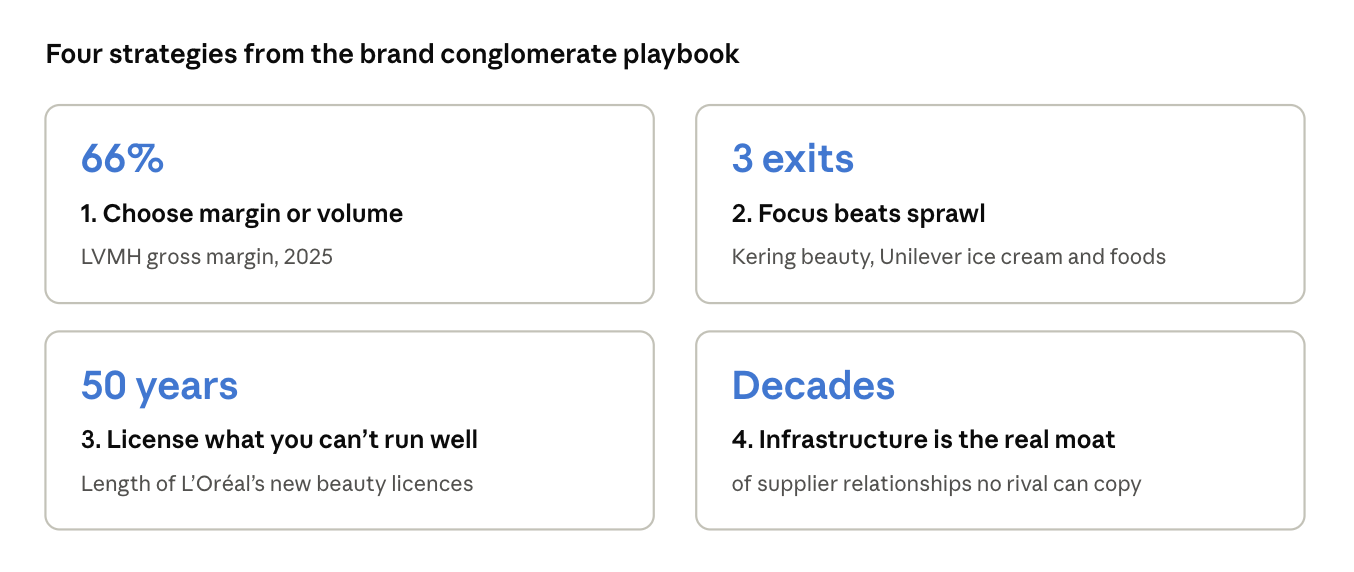
1. Choose your economics: margin or volume. Luxury operates on margins CPG can only envy. LVMH generated €53.5 billion in gross profit on €80.8 billion in revenue in 2025, roughly two-thirds, and Richemont's gross margin reached 64.4% despite higher precious metal prices, US tariffs, and currency headwinds. CPG trades margin for scale, and scale requires efficiency at every step of the supply chain.
2. Focus beats sprawl. Both sectors grew by acquiring. Now they're growing by letting go. Kering sold beauty. Unilever spun off ice cream and food. P&G is exiting brands market by market. Investors are rewarding focus.
3. License what you can't run well. Running a fashion house and running a global fragrance supply chain are different businesses. Expect more brands to keep the name and hand the category to a specialist partner.
4. Infrastructure is the real moat. A logo can be copied. Decades of supplier relationships, manufacturing capacity, and distribution agreements can't. That back end is what turns a collection of brands into a conglomerate.
Sources: LVMH gross profit · Richemont gross margin
"A logo can be copied. Decades of supplier relationships can't."
What This Means for Independent Brand Owners
Every category a conglomerate exits is a shelf, a customer base, and a supplier relationship that another brand can claim. For founders hoping to be acquired, the bar has moved. Conglomerates now buy brands that fit neatly into a focused portfolio and come with supply chains built to scale. With tariffs, currency swings, and material costs squeezing even the strongest companies, where and how a product is made is no longer just an operations decision. It's a strategy decision.
What this means for you
- Could your brand fit neatly into a focused conglomerate portfolio?
- Is your supply chain built to scale without breaking?
- What happens to your margins if tariffs rise 10%?
- Is any single product, customer, or supplier carrying your business?
The brands that get manufacturing right early will be the ones the giants compete with, or come calling for.
Building a brand that can scale? Nearshore connects brands with vetted factories across the US, Mexico, and Latin America. Find your manufacturing partner
Frequently Asked Questions
Who owns Gucci? Gucci is owned by Kering, the Paris-based luxury group that also owns Saint Laurent, Balenciaga, and Bottega Veneta.
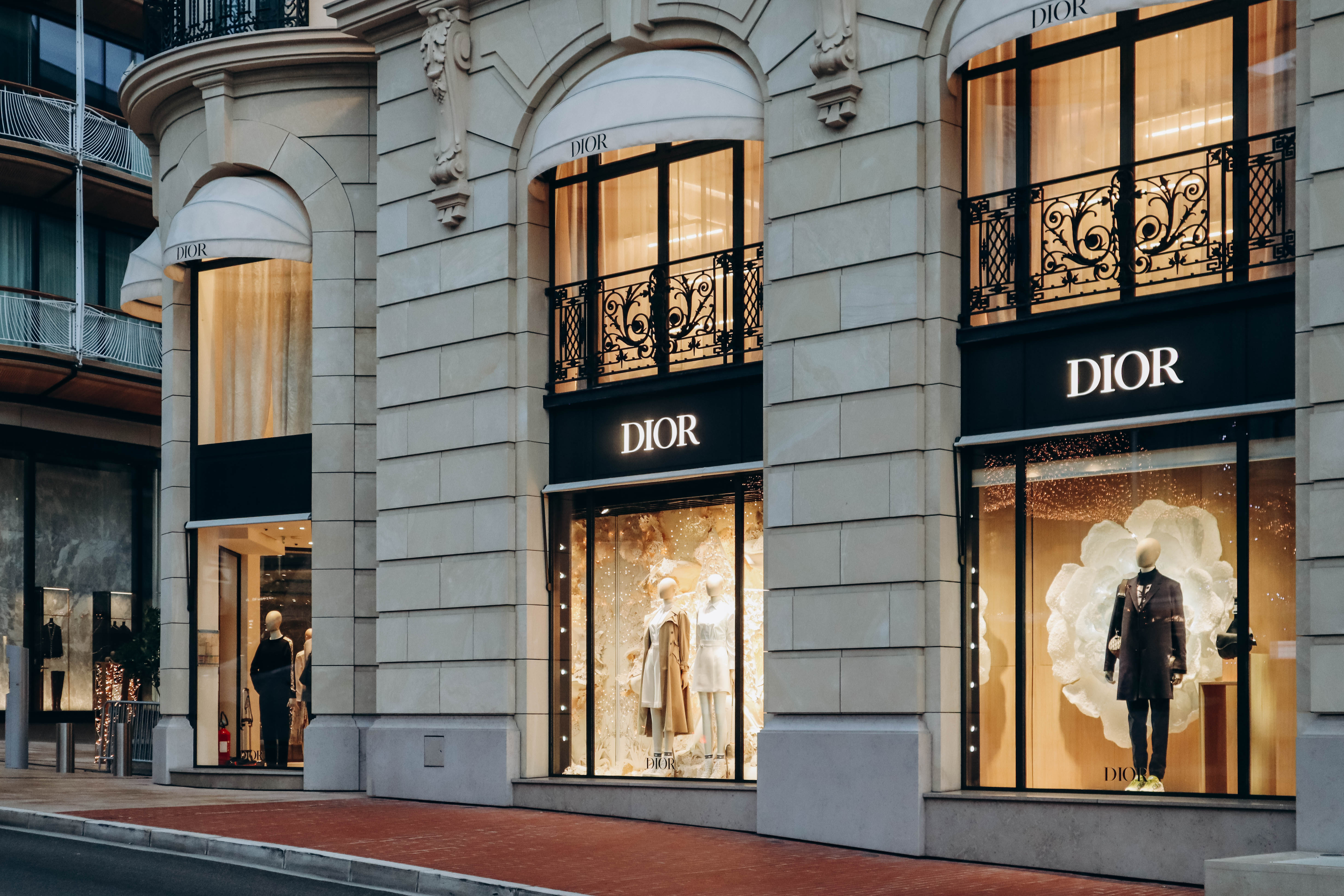
Who owns Sephora? Sephora is owned by LVMH, which also owns Louis Vuitton, Dior, and Tiffany & Co.
Who owns Creed? Creed is owned by L'Oréal, which acquired it as part of its purchase of Kering Beauté in 2026.
Who owns Ben & Jerry's? Ben & Jerry's belongs to The Magnum Ice Cream Company, which separated from Unilever in December 2025.
What is the largest luxury conglomerate in the world? LVMH is the largest luxury group by revenue, with more than €80 billion in annual sales.
Why are conglomerates selling off brands? Slower growth, debt, and investor pressure are pushing parent companies to focus on their highest-performing categories and sell or spin off the rest.
Sources
- LVMH: 2025 annual results · Division results (Retail Insight Network) · Five-year financials (FashionBI) · Maisons list · 75 Maisons (shareholder letter, July 2026)
- Kering: 2025 results (Personal Care Insights) · Gucci concentration and beauty sale (Reuters via BusinessDay) · Houses list (FashionUnited)
- Richemont: FY26 results · FY26 annual report and Maisons · Gross margin (Old Mutual analysis) · Baume & Mercier sale completed
- Procter & Gamble: Restructuring and domestic production (Reuters via Yahoo Finance) · About 65 brands in 10 categories (annual report) · Brand list (ROIC)
- Unilever: Ice cream demerger · Magnum demerger completed (Food Manufacture) · McCormick deal and timing · Deal size and ranking (NJBIZ) · Beauty and wellbeing shift (Reuters via MarketScreener) · 2026 priorities (Premium Beauty News) · Dr. Squatch (TIKR) · Tatcha acquisition · About 400 brands (Quartz)
- L'Oréal: Kering Beauté acquisition completed · 40 global brands (shareholder guide 2026/2027) · YSL licence and Gucci timing (Spear's)